Friday, March 4, 2022


 This morning, the neighbor girl stood at the end of her lane like a little soldier, looking toward the eastern sun, waiting for the bus. It is comforting to see children in the neighborhood wait for the bus, their lives of anticipation. 

Later this morning, I greeted the young man who came to pick up some donated furniture.  An exercise bike that got us through some long winters, both in Lewisburg, PA and Wooster, OH.  A spare mattress no longer needed because one of our children has moved out.  A small dresser that belonged to me in middle school; one that we never quite could find a place for in our multiple homes over the years.  

I noticed the other day that reading books with characters that remind you of people in your life is also somehow comforting.  It seems to give some sort of dignity to the experiences and people in our lives - to experience them through the written word.

I suppose that is also why God wanted to write us a book.  I read some Lamentations today; quandary about, "what is God up to anyway?"  Is he punishing us?  Is he loving us?  Why am I miserable and where do I fit into this narrative? 

I used to hold writing at a bit of an arm's length, thinking that too often I was creating ideals in my head through clever words, and resented the dissonance of "real life".  But written words can give honor.  The human brain is at times so unreliable to give a consistent picture of itself and the world.  Words can clarify and lead.


Tuesday, December 22, 2020


The Longest Night

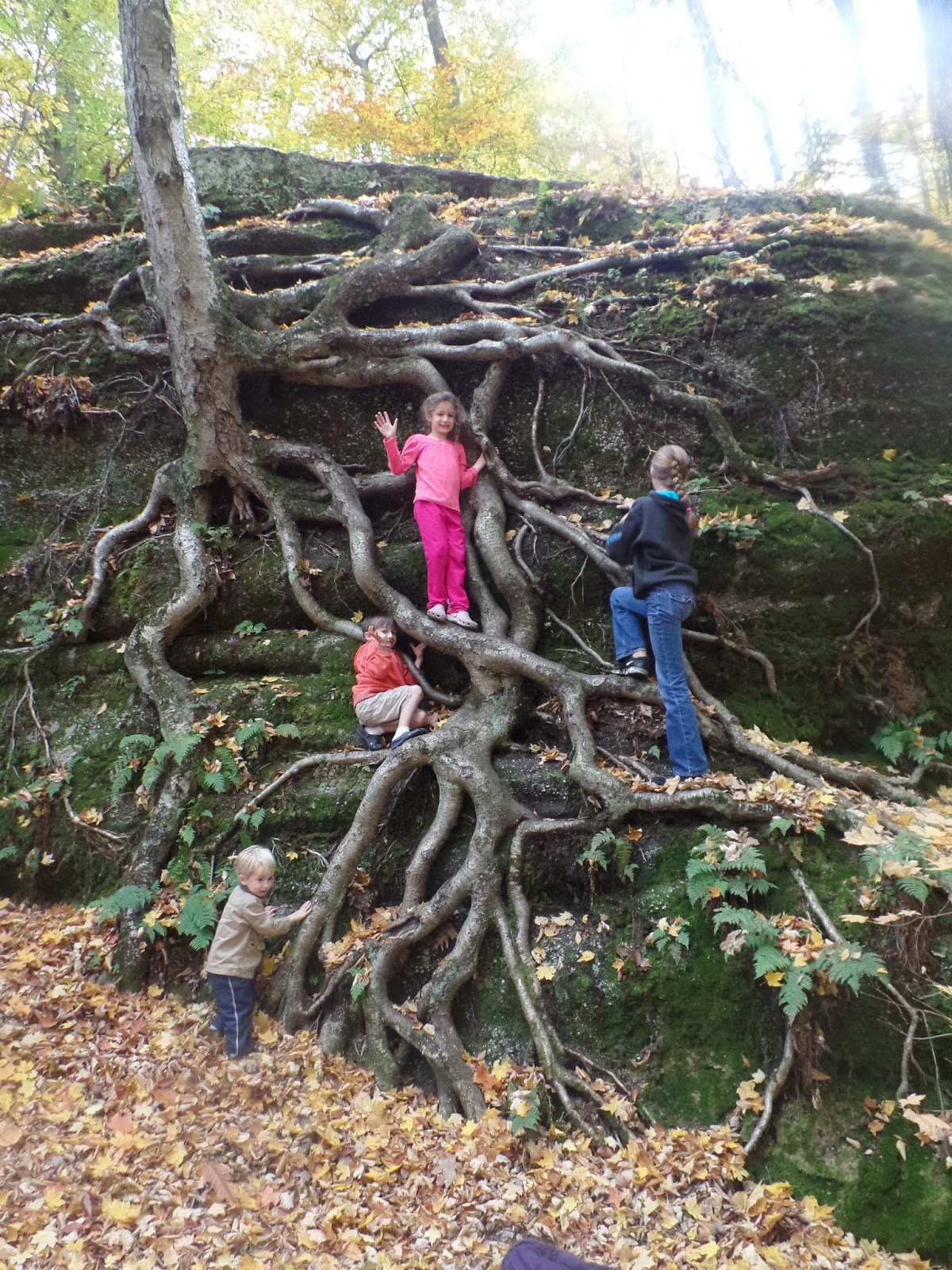
While the photo above was taken earlier this year, the layers of light and dark within the picture have a special poignancy for me today.  Humanity dances within the rhythms of light and dark.  

The longest night, winter solstice, has interesting and arresting vantage points for the soul, not only now but over much of time in the past and in many cultures.  (see the New York Times article, The Longest Night).

I think it is natural for us to be uneasy with darkness, to feel thwarted by the things we are unable to do or complete without the light.  How can we function without our sense of sight? How will we avoid the pitfalls?  It lowers our sense of control and safety, strips us of the cloak of accomplishments and visible possessions that we hide in.

Each year older I become, I hope that I can learn to come a little closer to terms with the rhythms of light and dark.  To wrestle against it less, to let it instruct me more.  How would my life enlarge and grow if I followed the footpath of my failures to some discovery rather than avoid that trail at all cost?  What seeds can I shelter in my hand and heart, dormant in the dark, dreaming of spring?


Saturday, March 21, 2020

The Age of Coronavirus


-A reflection on Ezra 3, when the Israelite captives were faced with the uncertainty of rebuilding their lives
              
                And when the third month had come, and the children of the United States realized that the coronavirus was in their midst, the people ceased their gathering together.  All the governors, after consulting with their learned men, sent out decrees to all their land, closing the schools, and the social places; even the churches of God became empty.  And fear had come upon many people because the routines were disrupted and the March Madness would no longer distract them form their own inner madness.  And furthermore, the stock market was shaken in a tumult, sometimes up and sometimes down, and the prospect of losing one’s retirement loomed in their minds.

                And yet, there were creative and stalwart people in the land, people who remembered the stories their grandparents had told them of other difficult times; tales of how hard work and creative problem-solving coupled with resolute faith in God and compassion for others had carried them through things like the Great Depression and the World Wars and other pandemics.  And some of them remembered even older stories, when times were even harder.  These creative and stalwart people, armed with confidence in the problem-solving skills God had given them, and confident in the power of what can happen when friends and neighbors get together to share and help each other, these people set their sights on new routines.  They developed new ideas for bringing structure and a sense of security and purpose for themselves and those around them. 

                They discovered that although the invisible virus was able to change so much in their lives and create so much unknown and fear – that some things could not be changed.  For one thing, spring was upon them!  Glorious spring with the birds singing in the morning!  And the woodpeckers looking for insects in the trees!  And the flowers thrusting up from the ground!  It was found that none of these things was the virus able to destroy.  And it was also found that the things that were taken away uncovered new things underneath that had always been there but were now more needed and easier to see and appreciate; things like the value of being with family and saying hello to a neighbor and how much we need each other to support our emotional selves and our ability to do the necessary work of life.  It clarified how thankful they were for their schools and their jobs and their churches, for the teachers and their work; and remined them that it was a special gift to be able to even have these things to go to, because now they knew what it was like not to have them. 

                But all of this was still hard, and there were times of weeping with loud voices, and times of shouting aloud for joy – for there were things taken away and new things given.  Many uncertainties could not be taken away, and even death need to be faced in some cases.  Yet in it all, God was present and speaking quietly to those who would listen; and many old stories were told, many songs were sung – and in time, new life emerged.

Tuesday, December 1, 2015

In the Faces of Our Children


In the Faces of Our Children                                       

This morning I remember to hold Nigel
-a few minutes for our bodies to remember that we are on the same team
Before we begin working out what he will wear
What he will eat for breakfast.
As I hold his never quite still self, gratefulness seeps in.
This morning he remembers to go to the bathroom before he eats
-instead of wiggling in his chair painfully for 10 minutes.
He listens to his body!
We have 10 minutes before the bus comes.
His face lights up when I bring out the sight word cards.
His delight in learning!
In putting the little pieces of the world together in a great connected jigsaw puzzle!
As he sounds out “who” and “eat”, “woo” and “et”, his face twitching in concentration,
I sense the strength of this child. 
He will do great things with his mind.

Maggie asks me again if she can wear her snowboots to school
Even though it is 45 degrees outside.
She is relentless to express her ideas
Without consideration of practical details.
She wants to do many things at the same time
Wants to read and eat breakfast together
While I comb her hair.
She hums and wiggles constantly at mealtime
Makes faces in the stainless steel rice pot
All supper long.
Yesterday morning she was creating stories.
Before I knew it, the boys were following her around the yard
Carrying Legos, piling up grass for her plastic horse
Following her relentless creative spirit.
She will be active, she will inspire others
She will bring movement and magic to the blank, dark spaces

A creator.


Wednesday, November 4, 2015

Monday, August 17, 2015

Drawing owls with "sharp eyes"

Drinking tea made by her sister on day 7 of her feverish illness

Eating breakfast

Morning tea maker, disappointed about last day of summer vacation

Tuesday, April 14, 2015

Introducing the PIC-flict


Further thoughts re: discussion about parenting, the introduction of the PICflict.

It is easy to think (in the early stages of parenting) that one can pick and choose which experiences he would like to shape his children’s upbringing, and thereby what values he wants to instill in them.  (I want my children to know how to work, I want my children to appreciate the value of money, I want my children to have idyllic carefree play time, etc.)  Unfortunately, there are limits to many of these good intentions.  Can one simply pick and choose values, experiences that may come from different eras, cultures, contexts, lump them together in a customized amalgamation and expect it all to work?
Society and culture has shifted, is always shifting.  From rural and agrarian to metropolitan, from industrial to professional, from religious to secular, from reliance on community and self-labor to mechanization, technology, education, etc.  The list goes on.

These shifts are not only in ideals, morals, world-views.  They are concurrently shifts in how time is spent, how easy or accessible certain activities are in the flow of our routines, how valued and supported certain things are.  How we acquire the necessities of life changes.

For example:  We don’t NEED to plant a garden.  To really garden, one needs to put in time.  A couple hours per week minimum just in maintenance?  Not to mention research time, planning time, planting time, troubleshooting time, processing of produce time.  One needs to have a means of working the soil.  Do we have access to a tiller?  A small tractor?  A trailer to haul one?  Neighbors or family who we feel comfortable borrowing from?  Are we gone many weekends of the summer?  We travel more nowadays.  We have soccer games to go to.  Skating lessons.  Family camps.  Vacations.  Six Saturdays spent at the soccer complex are six Saturdays that we’re not going to be able to spend in the garden.  So the ideal of (I want my child to have opportunity to play sports) is in competition with the ideal (I want my child to participate in the life cycle of a garden).   Just one example of a Parenting Ideal Conflict. (or PICflict)

I think a truth that I’m whittling toward with all this babble is that the transference of values to our children requires TIME.  Not only is that time so difficult to come by, but how we spend our time has changed a lot, even from the time we were kids to parents.  


Thoughts?

Friday, March 7, 2014

daily failure

after pushing M (age 5) through the ropes of the morning routine and just emerging in time to catch the bus, a few minutes to spare - with shoes, coat, backpack, snack and water bottle - I decide to forego the spelling list today, even though we haven't had the time for it for about a week.  she surprises me by handing the list to me - a silent gesture "lets do the list dad."  she makes attempt at the first word, at first replacing the "i" in "with" with "a", then getting the "th" after I isolate the sound.  when I ask her to do it again, all together, she absentmindely spells t - h - e.  I laugh out loud because I know she is distracted and I have a tendency to make things like this task to serious.  (she is a good speller)  and laughing out loud is a much better way of dealing with chaos than getting uptight.  I tell her that she's "not thinking" and that we'll do it another time.  The bus is now imminent.  She must be interpreting this as an insult because, wordless, she shuffles out the front door and does not blow me the customary kiss as usual.  she is stating her disapproval. 

I sigh as I watch her purple and pink colors walk over the brown late winter grass towards the bus, wondering at the incredible odds against positive parenting - the constant thwarts against good intentions, the million ways that children cause us to feel as though we are failing. 

there are way more things to do and be done in this job than it is possible for us to do, unless we can figure out a way to stay up around the clock consecutively for about 25 years.  and yet, we cannot help ourselves from trying to do it all.  but the harder we focus, the more likely it is that we will miss something important that is happening on its own.  somewhere between the ideals we hold ourselves to, the efforts we produce and the perceived failure that results - there must be a place for us to exist.  that is part of the daily routine of living.  working that algorithm again and again, trying to come out at the end of the day with some semblance of contentment - that we have given the day a good whirl, hung on tightly to the kite string and were not afraid to look up at the kite and laugh.

The older we get the more we fail, but the more we fail the more we feel a part of the dead straw of the universe - Robert Bly 


Tuesday, November 5, 2013

the morning lift


The smell of my wife’s perfume upstairs 10 minutes after she has left, wet hair, a true kiss at the door. E crawling about the feet, wanting to be up. N ramming Mommy goodbye, shaking things up.

Up at 5:50, someone has wet the bed. Surprisingly there is no shock to this news, almost no inconvenience. I have crossed some divide somewhere – I have finally immersed completely in parenting.

I have been up for 3 hours and have not yet eaten breakfast. There are too many variables in the schedule this week to keep track in my mind, but each one persistently circles overhead, tempting me to cage them in a neat linear row, but I know better.

Two nights ago sleep came wonderfully, maybe we are over the 6 week illness slump? Last night a harsh reminder of all of the Variables. E up more times than I can count, N up twice: once for potty, once for unknown reasons. M yelling intermittently with her dreams, unable to be stirred from them. Each time I go back to bed I glance at the clock; how much chance left for rest?

Watching the sunrise with L as we wait for the bus. A deep, resilient red as I hold her on my lap. The color lasts only a minute and is gone.

O hands me a little notebook of poems written by our 10 year-old. Have you seen these?

I haven’t and as I read them I cry.

The coffee lifts me, some music. Two kids at home in their jammies. Most of the leaves have fallen in our yard. Maybe we can rake them today. Make some piles that the kids can jump in before they grow up too much. As I grab yogurt for the E I notice that cider has leaked all over the bottom of the fridge. This outlines some of my work for the morning.


Thursday, August 22, 2013

Inner Work

the garden in early spring which has since been nearly overtaken by weeds
 
 
It isn't rocket science, or even really statistics: that having and raising children should crowd out other aspects of one's life - and crowd others in.  And yet, the reality as it pulls on one's body day upon day, becomes striking in moments of clarity, as though the rest of the time dreams dance, mists hover about the ground you walk on, the sun comes up slowly but every day.

I started this blog when I was in charge of two children ages 5 and 0 with a steady average monthly posting output of 5.  Then . . . each year the rate steadily drops, as the age and quantity of children steadily increases. 

Children's ages vs. monthly blog output

5, 0                5
6, 1                3.1
7, 2, 0            1.7
8, 3, 1            .8
9, 4, 2            .5
10, 5, 3, 0      0

Again, this is not an innovative analysis of data that I am rushing to the nearest peer reviewed journal.  We know these types of realities intuitively, rationally, but in some ways not at all.  Reality comes to us in waves, particles, vibrations, in visions.  We describe in part what we know in part. 

I have experienced adulthood largely as a crisis of the ideal.  For our early years, we are largely thinking forward, of what will happen, what can happen, what is out there to find?  We are the little pigs who go out to seek their fortune.  At some point in the seeking, the adventuring, the delving and the dumpster diving, we crest some wave and hang in midair.  We are either exhausted or disillusioned, delusional, or bankrupt of clear hope.  The things for which we have grasped remain outside of reach, the things we do hold are much different than we imagined.  Thereupon is reflection, we allow ourselves to question our strategies and calibrations. 

At times it is easy to blame the crisis on the things or people who we have chosen to love and care for.  A part of us longs for autonomy, the freedom to build and create, unshackle the self-will. 

But something organic, something inevitable, something that works slowly but steadily like the weeds and growth that cannot be driven away; something of the necessities that enslave our daily toil waits for our quiet transformation - the hidden, inner work of a man.  As Kazantzakis would say - to turn matter into spirit. 

Sunday, February 24, 2013

Well, we've gone and done it again.  Like true champions, we've managed to keep the rational voice corralled long enough so that the intuitive one can rule the day.  Child #4 arrived one week ago today!  He hasn't been here long enough to make any big, wide-swathed statements, but so far it feels both completely chaotic and completely right. 

Birth, like death, is a mighty equalizer.  At death there is universal grief; at birth there is universal joy.  The instinct is to smile, lean in and glimpse the essentials of being alive in a delicate face only days old.  After a birth, we scramble to decipher the visual code of the newborn - who does he look like?  what traits will he carry?  We dig out photos of the other children when they were born, of ourselves.  Relatives stop in to pay their respects, give their opinion and like wolves, bestow their blessing on the newest member of the pack. 

 My wife and I laugh out loud at the pictures of ourselves holding our first child almost 10 years ago. We appear inept, unaware of pending doom, naive and inexperienced. (and we were) It can be argued that we still carry these traits, but it is certain that now, 10 years and 4 births later, we have at least a bit more grasp of the situation. We know more about love, commitment, endurance, hard work, patience, long-suffering, laughter and hopefully, grace. Childbearing and child-rearing: important work, important play. We train each other along the way.


Tuesday, January 22, 2013

Two-Hour Delay


This morning our little school district has called a two-hour delay, so at 8:12 a.m. we cluster around our woodstove.  L (9) sits directly in front of the fire, reading a book of short stories, her "other" book before she delves back into fantasy.  We have agreed that instead of reading only books about dragons and magic, she will take turns with other types of books.  M (4) sits with her blanket and stuffed animal of the day (eagle) on the couch and twirls the Perplexus puzzle expertly in her sensitive fingers.  She takes great delight in creating shortcuts for the metal marble, jumping the rails to end up in the end-pocket, much to her sisters despair and glowering eyes.  N (almost 3) stands/runs/jumps on the couch, cheering on the Perplexus energy, giving me constant updates on its progress, and running Kleenex back and forth to his older sister, who experiments with delegation even at such a tender age. 

I assume that the delay is for the wind chill, (-10 F) as there is little visible snow on the road.  This is as a about as cold as we want it to get here in rural Ohio.  We aren't used to weather that compromises our cars' batteries.  It is easy this morning to believe that my day has a two-hour delay as well.  And so I decide to try my hand at blogging in this little window of opportunity, before the weight of housework sets in for the day.  Finish up laundry from yesterday, begin cleaning today, dress the children, gather wood, etc. 

One of the benefits of non-centralized heating is that the woodstove provides a natural gathering point for the family.  Like heat-loving bacteria around a sea floor vent, we prefer to be close to the source of warmth - and our mornings and evenings usually find us in close proximity.  (yes, we have a convenient backup natural gas furnace in the basement, but during the day our living room woodstove becomes our sole source of heat).  So on days like this one, we can feel the cold seeping into the house's edges; I am extra attentive in keeping the fire banked. 

I have found myself laughing more frequently and heartily in the last few weeks.  My wife wonders if I have reached some new level of zen - I tend to think I've learned to let more go, accept new levels of chaos and uncontrol.  Child #4 arrives in six weeks, give or take.  The existing three provide enough trial, angst and surprise for my heart.  They unseat my anger, and my complete adoration; exhaust my emotional self thoroughly and in every way.  The 9-year-old, while fiercely independent shows signs of care and tenderness.  The 4-year-old finally emerges from years of grumpiness to a wonderful delight and prank-filled robustness.  The two-year-old becomes deeply two, and experiments with tantrum and rebellion. 
 Mario Brothers